

Pneumatic exhaust silencer selection starts with the exhaust duty, not just the port thread. A suitable silencer needs documented flow performance, an acceptable effect on back pressure and materials appropriate for the service. Noise-reduction figures are useful only when their measurement conditions are understood.
Silencers are also called pneumatic mufflers. They fit into an exhaust path, so their suitability should be reviewed alongside the valve, actuator and any connected exhaust tubing.
Separate the connection from the exhaust requirement
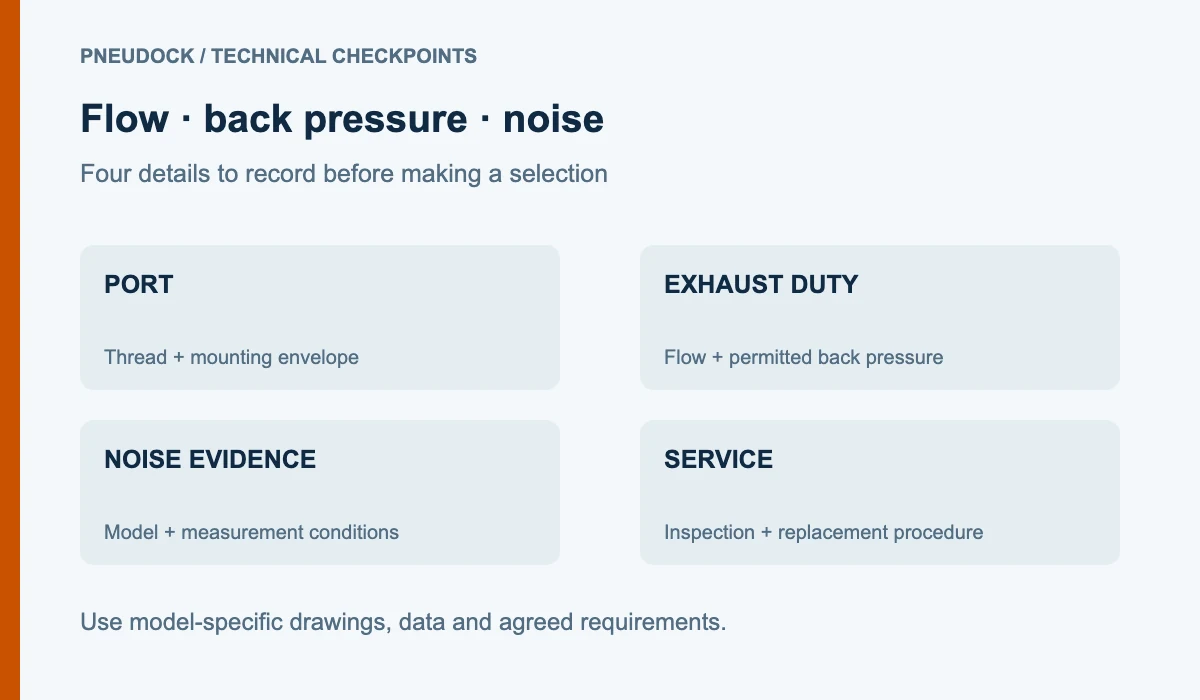
Record the exact valve exhaust port and thread standard, the space available and the manufacturer’s permitted mounting arrangement. Then describe how the equipment operates: the relevant actuator, cycle pattern, exhaust path and any existing restrictions. A silencer that physically fits the port may still need a different performance assessment.
PneuDock lists BSL tower-type silencer references. The page provides identification and inquiry information; it does not state a tested sound-reduction rating. Request model-specific data rather than attaching another manufacturer’s figures to a BSL reference.
Air exhaust silencer flow capacity and back pressure
SMC describes its AN range in terms that include low back pressure and different noise-reduction designs. Its catalogue also provides flow-related data. This illustrates why thread size, flow capacity and acoustic performance need separate fields on a comparison sheet.
| Selection item | Useful evidence | Question to resolve |
|---|---|---|
| Connection | Exact thread and mounting drawing | Does it match the exhaust port? |
| Flow | Model-specific flow data and conditions | Does it suit the required exhaust duty? |
| Back pressure | Permitted limit and performance data | How does the exhaust path affect the machine? |
| Noise | Test method and stated conditions | Are the compared figures on a similar basis? |
| Service | Inspection and replacement instructions | How will deterioration be identified? |
Do not convert a figure for one series into a universal back-pressure limit. Ask the machine or valve manufacturer which limit applies at the relevant operating point. Where two suppliers quote different forms of flow data, request a comparable basis instead of ranking the largest number.
Pneumatic silencer noise data comparison
Ask whether a figure describes a measured sound level or a reduction relative to a defined unsilenced setup. Record the operating pressure, exhaust flow and measurement arrangement supplied with the result. A reduction figure alone does not predict the sound level at an operator’s position in a different machine.
Use acoustic data to screen candidates, then retain any application assessment required by the equipment owner. Avoid promising a particular workplace noise result from a catalogue number. The purchasing record should preserve the test document and model identity so later substitutions can be assessed on the same basis.
Pneumatic exhaust muffler maintenance checks
A blocked exhaust path can change machine behavior. Include the manufacturer’s inspection and replacement requirements in the equipment maintenance plan. Keep any stated change in back pressure or operating condition tied to the installed model and its service instructions.
Build the maintenance record around the installed model, service conditions and observed condition. Note changes in operation and refer them to the responsible maintenance person. Do not assume that all silencers can be washed, dismantled or cleaned with the same solvent. Isolate and depressurize equipment before an authorized inspection or replacement.
An illustrative comparison request
A buyer has two silencers with the same nominal port size. One quotation supplies only a noise-reduction claim; the other includes a flow curve and service instructions. The buyer requests the missing performance documents before making a selection. Neither the common thread size nor the quieter-looking body resolves the exhaust requirement.
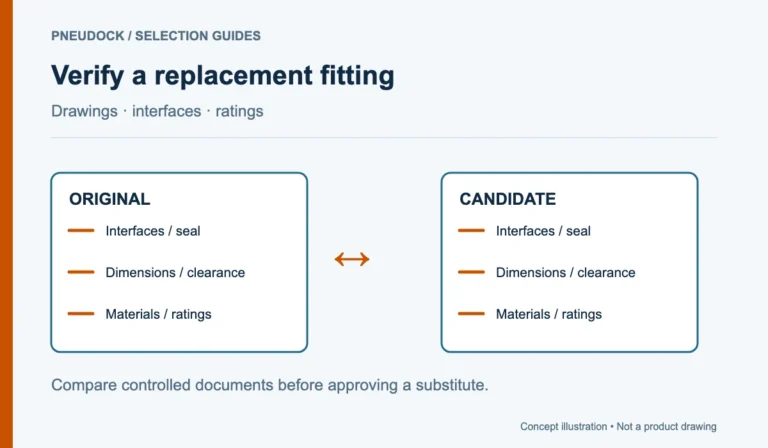
Send the port drawing, present silencer reference, exhaust arrangement and the operating problem with your inquiry. Keep unresolved performance items visible when reviewing a response using the pneumatic quotation checklist. Approve the exact documented configuration rather than a generic description such as “air muffler.”
Technical references
- SMC: AN silencer range — manufacturer product overview and catalogue access.
- SMC: AN Silencer catalogue — model-specific flow and noise performance fields and circuit-dependent noise conditions; these are not PneuDock ratings.